:::::::::::::::::::::::::::::::::::::::::::::::::::::::::::::::::::::::::::::::::::::::::::::::::::::
New Year's Day
***** Location: Worldwide
***** Season: New Year
***** Category: Humanity
*****************************
Explanation
New Year's Day, ganjitsu 元日
This is the first day of the year, January 1st.
Lately, special festive events have become rare. The traditional mood has become a thing of the past and many people tend to simply stay home quietly. Nonetheless it is still considered a day when people welcome the new year with a refreshed mind.
The various terms which designate New Year's Day (元朝 ganchō, ganchoo; 元旦 gantan; 大旦 ōashita ooashita) particularly refer to the morning of the day, when the members of the family gather to celebrate by drinking spiced sake (屠蘇 toso).
gantan 元旦 : the kanji shows us the sun about to rise, so it refers more to "hatsu hi no de", first sunrise.
. hatsuhi no de 初日の出 .
Another related term that means New Year (歳旦 saitan) extends its meaning to the first three days of the New Year.
元日や晴れて雀のものがたり
ganjitsu ya harete suzume no monogatari
New Year's Day--
the sun shines,
the sparrows' story
Ransetsu 嵐雪
University Virginia Saijiki
*****************************
Worldwide use
*****************************
Things found on the way
*****************************
HAIKU
元日や神代のことも思はるる
ganjitsu ya jindai no koto mo omowaruru
New Year's Day -
How it evokes
the Age of the Gods
. Arakida Moritake 荒木田守武 .
:::::::::::::::::::::::::::::::::::::::::::::::::::::::::::::::::::::::::::::::::::::::::::::::::::::
- - - - - Matsuo Basho - - - - -
元日に田毎の日こそ恋しけれ
元日は田毎の日こそ恋しけれ
ganjitsu wa tagoto no hi koso koishikere
quote
New Year’s Day:
Now I long to see
The sun over Tagoto.
Tr. Buntin
It is recorded that this haiku was composed on New Year’s Day of 1689, when Basho was 46 years old, at his residence in Ueno. The autumn before, Basho had made a journey to Mt. Obasute (in present-day Nagano Prefecture), as described in his book Trip to Sarashina. At the base of Mt. Ubasute there are many small rice paddies, tagoto in Japanese. The autumn moon reflecting off those paddies is a famous sight, and thus the area was given the place name “Tagoto.” Basho had long wanted to witness the scene of the autumn moon over the Tagoto rice paddies. After a difficult journey, Basho was rewarded with the view of his dreams.
When Basho saw the sun rising on New Year’s Day, ascending over the decorative New Year pine branches, it brought back fond memories of the moon’s reflection on the wet Tagoto rice fields, but at this time it would be the sun that was shining on the dry fields. By placing his distinctive signature within the circle--representing both the sun and the moon-–Basho suggests that his heart his would be equally captivated by the sight of either the moon or sun over the Tagoto rice fields.
Also, since tagoto can be taken to mean “the many rice paddies of Japan,” the haiku can be interpreted as meaning,
“A new year is dawning all over the land, each place receiving the light of the sun in a different manner, what a lovely thought that is, bringing back fond memories of the places I have visited.”
It is quite likely that this haiga was made on the actual day the haiku was composed; perhaps even haiku and painting were created together. It is browned with age but Basho’s brushwork remains bright and fresh. This is an extremely rare and fine Basho haiga.
Look at a tansaku script of this poem:
source : robynbuntin.com
On New Year's Day,
in every rice paddy
the sun is more dear.
Tr. McAuley
元禄2年元旦
..........................................................................
元日や思えばさびし秋の暮
ganjitsu ya omoeba sabishi aki no kure
First Day -
deep in thought, lonely
autumn evening
Tr. Barnhill
The First Day of the Year:
I remember
A lonely autumn evening.
Tr. Blyth
On New Year's Day,
now I think of it, how sad is
an autumn evening.
Tr. McAuley
Written in 1683 天和3年. Basho age 40.
On the first day of the year, many people stay at home and the village is more quiet than ever. It reminds the poet of the quiet sunset of a late autumn evening.
Written in the Danrin style of haikai.
. Matsuo Basho 松尾芭蕉 - Archives of the WKD .
:::::::::::::::::::::::::::::::::::::::::::::::::::::::::::::::::::::::::::::::::::::::::::::::::::::::
苦にやんだ元日するや人並に
ku ni yanda ganjitsu suru ya hito nami ni
all New Year's Day
I fight off my worries
like everyone else
Tr. Chris Drake
This hokku is from the 12th lunar month (January) of 1826. It was written several days before New Year's Day, so Issa may have been suffering fairly serious depression. He must have known what New Year's Day would be like because he already had serious anxieties about himself and his future and grieved for the souls of his dead family who once lived in his house with him. In 1823 Issa's wife Kiku died, and at the beginning of 1824 his third son Konzaburo died. This meant all four of his children had died young. To make things even worse for Issa, in the 5th month of 1824 he remarried a woman named Yuki, who very soon left him and in the 8th month forced him to divorce her. The shock must have been intense, since less than a month later Issa had a stroke that temporarily took away his ability to speak, and he had to spend the next four months recovering at the homes of various students.
Finally he recovered and returned to his empty house in the twelfth month. In 1825 Issa spent about 70% of his time at the houses of others, but the convivial atmosphere at his students' houses seems to have protected him against depression. After Issa returned to his empty home in his hometown in early January 1826, he became snowed in, and, if his hokku are any indication, his mood as he stayed alone in his house, surrounded by painful memories, seems to have become darker. Issa no doubt hoped to remarry and have a family, but at 62 his body was weakening markedly after a life of living mostly on the road, and he may have doubted he would ever marry again. In fact he did marry for a third time in the autumn of the following year, but he died in early 1828 before his last child was born.
In 1833 Issa's follower Souki edited Additional Hokku by Issa (Issa hokku-shou tsuika). It includes a variant of the above hokku with the word "Travel" written before it, so perhaps Issa wrote this version later, while he was visiting someone at New Year's. The original hokku, however, was written in the 12th month while Issa was at home.
His diary for the month says, "At home all thirty days."
Chris Drake
. Kobayashi Issa 小林一茶 in Edo .
:::::::::::::::::::::::::::::::::::::::::::::::::::::::::::::::::::::::::::::::::::::::::::::::::::::::
Haiku and Photos from Tomislav Maretic, Croatia
2006

foggy morning --
first sparrows
on the bare branches
oooooooooooooooooooooooooooo

New year morning --
Sljeme mountain slowly
comes out from the fog
oooooooooooooooooooooooooooo

firecrackers in the morning -
the sparrows shift
from tree to tree
oooooooooooooooooooooooooooo

rooster's crowing -
the new year day's
first felicitation
oooooooooooooooooooooooooooo
groggy morning -
some champagne still left
in the glasses
new year's day --
for our hangover
this vegetable soup
first coffee -
waiting for the concert
from Vienna
oooooooooooooooooooooooooooo
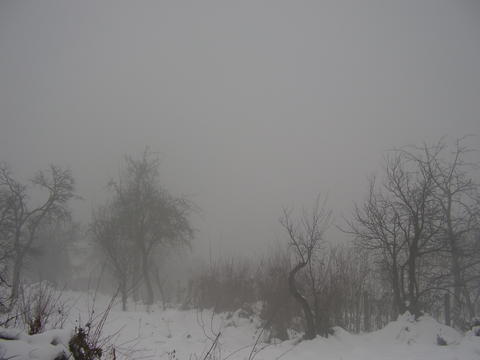
first mountain view!
while I find the camera
it's swallowed in fog
xxxxxxxxxxxxxxxxxxxxxxxxxxxxx
*****************************
Related words
***** New Year's Concert Vienna Austria
***** New Year (shin nen)
[ . BACK to WORLDKIGO . TOP . ]
:::::::::::::::::::::::::::::::::::::::::::::::::::::::::::::::::::::::::::::::::::::::::::::::::::::


















 Posts
Posts


